Wednesday, December 9, 2009

Getting Nowhere Fast

I believe we've agreed to let our Great Utopia Debate rest for a little while and move on to other things, but I just wanted to briefly mark another significant appearance of Erewhon in Latour's corpus, on pages 166-167 of Reassembling the Social:

As we have already witnessed on many occasions, there is often a wide gap between the correct intuitions of social sciences and the odd solutions they provide. This is once again the case: they have tended to confuse the projection of the Phantom Public with the pre-eminence of society. It's true that both have only a virtual existence but not in the same way. The first is a constant appeal to resume the impossible feat of politics, while the second is nothing but a way to dissimulate the task of composition by doing as if it was already completed: society is there, above our heads. So, when inquirers begin to look away from local sites because obviously the key of the interactions is not to be found there — which is true enough — they believe they have to turn their attention toward the "framework" inside of which interactions are supposed to be nested — and here things go terribly wrong. Starting with the right impulse — let's get away from local interactions! — they end up, to borrow from Samuel Butler's famous title, in Erewhon.

Could we substitute "humanities" for "social sciences" here, I wonder? Maybe that's a little hasty, but don't we also tend to run toward the social "framework" way too fast, precisely because we're afraid of getting mired in the local (i.e. the textual — remember the self-conscious concern in the 70s, which overlaps with deconstruction, to get "beyond formalism")? But notice that the problem is not so much the direction, or the movement, towards utopia but the speed of the travel, something you acknowledge at the beginning of your last and post. It's not that it's bad to connect the social to something more than the empirical, to possible worlds or political change; that it's our job to do this is a "correct intuition," and something worth saving, Latour says. It's that we want to get there so badly that we forget to trace the network that could eventually lead us there. It's not necessarily that we shouldn't want to get to utopia/Erewhon/nowhere, then: it's that we shouldn't expect to get there so fast.

Always low prices


It's a small price to pay, but it's still the wrong price, and that makes me question the economy--though, of course, you're right to get skeptical about such "accelerations" (great word) to the general. The benefit of ANT as Latour uses it is for me--if I can add something to your great post on this, or rephrase it a bit--not so much in that it makes us slow down in these instances and get more specific about what we're referring to (though it does that), but also allows us to think in a non-accelerating mode generally, where we are no longer tempted to specify the determining instance, as if that would knock the argument down. Or, to use your language (and video game collection--awesome), it allows us to get off the elevator entirely--and not just take the stairs, but, say, fly out the window if we want to get to another floor. In that spirit, I'll revisit what I said in the utopia posts, and actually bring in the article/introduction to Pandora's Hope, "Do You Believe in Reality?"

First, clarification. "It’s hard for me to see optimism as inseparable from utopia." I knew putting it that way would get me in trouble--it was a dumb and unclear way to write (certainly philosophical terrain, there!). I simply meant it is hard for me to see utopainism in the same way that BL sees it. And this I said was as optimism. In other words, I was saying that utopia is, at its core, optimism--for BL. For me, they're more separable (in a way I'll get to in a sec).

Now, my point is that Latour can use this utopia-optimism connection or co-implication (the latter word being what I should have used instead of "inseparability") to both critique utopia as a representation (as you succinctly put it) and also salvage utopia by offering an alternative to optimism--which I called realism. It really isn't a stretch here, I think, to "blur[] realism as a philosophical position together with realism as a political style or strategy," as you said, since I think this the point of everything Latour is doing, no--as long as we agree that the blurring produces a transformation akin to the one I said happens with rhetoric: producing a new rhetoric by rejecting "the" (modern, postmodern) political as constitutive of politics, or by seeing politicians (finally!) as political. And from this, I try to extract a sort of pragmatism, which I think is perhaps just another more dignified way to characterize that sort of "stupidity" I was getting at earlier--Latour's motivation to keep himself from being intelligent, as he puts it occasionally--and showing that it ironically (and laudably) remains something like the impractical element of a realism, but in a new way (so we have something like the realism-pragmatism of a Putnam inverted). So I don't think that's entirely a digression so much as a (badly connected) statement of Latour's version of utopianism and what I like about it, that ends up setting the scene for what follows.

Now, I don't mean this to be a knockdown argument, despite what I say at the end (more on this in a sec). I am just tying things together, trying to show how Latour is able to cut across all the very settled distinctions and come up with something new. One could say, though, that I'm precisely undoing his composition of the collective, his symmetry, either to show how it works or to critique (a vague, vague word here--I'll be returning to this in post on steamy critique) it. So when I return to utopia, and say that there are many types of utopia, perhaps, and some of them are not necessarily optimistic, you say that: "It seems to me he’s fully on board with both of them — and would maybe even refuse to accept your distinction and argue they’re basically the same thing." I think that's right, but it's really a question of how such a move is possible. I'm not saying the existence of many utopias is really something that isn't accounted for in Latour: you can't argue against him on that front, ever, since he doesn't reduce (and I have to say, as an intellectual exercise, it's wonderful to try and think of the person you're writing about as never reducing anything, but adding more always--but more on that in conclusion). I'm arguing that this refusal of a distinction--everybody in the Aramis!--takes a certain direction, and I'm tracing that direction. The direction is towards lending a "purity of the feeling or the love" to utopia, that, I say, "seems suspicious--and less utopian, since utopia is always much more tinged with fear or boredom about its realization." By this I don't mean that utopia is a more complicated thing than Latour makes it out to be, and that this invalidates what he has to say tout court, but that Latour is proceeding to characterize utopia in a specific way--and in a way that basically is asymmetrical.

It's important to recall that symmetry isn't between the humanities and the sciences, but between objects and society. And I think it's Latour here that forgets this, ultimately, in some way, because he doesn't make the utopian into more of a social thing than it supposedly is, but instead proceeds to invest it with sociality from the fact of its being studied by the humanities, as I argue.

This isn't really anyone's fault--it is studied by the humanities after all. Nevertheless, the connection seems a bit more external than usual. Perhaps, though, one should shift terminology and say that it isn't entirely a knock at the humanities that is going on here. Maybe that's an acceleration, saying that Latour really has that object in mind (represented) when he's talking about utopia. But then why are you, and him, so quick to agree with me here?

...Yes, I agree, it [BL's anti-Copernican revolution] does go against much of the humanities as they are currently constituted and rationalized. (Somebody who knocks out Kant, Hegel and Heidegger all at one go isn't leaving much left to prop up the philosophical aspirations of our English and Comp. Lit. departments.) But I don't think it follows from this that Latour is anti-humanities, any more than the introduction of objects into actor-network theory makes him an anti-humanist, and the fact that he wants to enlist the humanities doesn't mean he sees them only as a means and not an end. It just means he's refusing to see the humanities as what they so often agree to see themselves as: the opposite of technology, the opposite of science.

I'd agree with the end of this. Though I don't think I ever called Latour an anti-humanist or anti-humanities. I take this sort of putting me in a particular box (pro-anti, which in my first post I tried to show broke down in a great way in Latour and in your discussion of him), however, as symptomatic of what is going on. For I also take your statement here (well put: elsewhere Latour speaks of the end of the means) to mean that there's something going against the humanities and how they think of themselves in what Latour says (ultimately) about reinvesting technology with love, or, as you put it, "by praising them [the humanities] only for their role in making things happen, for motivating action." But how did we agree that the motivating of action is of a certain type--the type of recalling us to the passions, say, such that we can show how technology is invested with love? Observation? Hardly, though Latour's approach actually (unlike so many other approaches) allows that to happen. Making it into a matter of "what they often" (often does a lot of work here, as it does in Latour in instances where the humanities comes up--that's my point in a nutshell I guess) "see themselves as." It's a matter of locating the box before it's opened or closed, as it were. Latour has a lot to say about this in Reassembling the Social, but I think the process is a lot more negative than perhaps he would like to admit (and he admits it is negative, at stages), at least when it comes to the humanities. I see Law and the more sociologically-oriented people correcting this, though they sacrifice many of the metaphysical payoffs of Latour that I praised earlier. But it's a matter of tracing how this happens--that's all I'm up to.

So perhaps it would be better, then, to say that there isn't so much a knock at the humanities going on (and that's all it is, nothing wholly anti-humanities... or at least it's only anti- in the way that he is anti-science which we once discussed, which also means being pro it... maybe you are referencing that) when this sort of utopian characterization is occurring, so much as a notion that utopia and other such objects that we study don't fiddle with its objects in the way the sciences do--a characterization that, it seems to me, is just "agreed upon" in too many ways--ways that the sciences are not entirely "agreed upon," mostly because Latour works with them in more detail (and there's nothing wrong about that!: like I said, Latour's approach makes possible the opening up of the humanities box in such a way that the location of it in Latour can be shifted!). That's really, I guess, what underlies a lot of that connection between the preface and the discussion of utopia and optimism, and why I want to register the many sorts of utopias: it's just that the "basically they're all the same" is moving towards a particular notion of sameness--I'm not saying they're each to be respected in their wonderful own uniqueness, or that, indeed, they aren't all basically the same. It's that there are more means--more morephisms to it all (and I think Latour might like this point of view, in the end). I should have quoted "Do You Believe in Reality?" (here I finally get to it) which was in the back of my mind here when I say that to him, its the sciences that tinker, fiddle. Latour says the following:

If anything, and here we can be rightly accused of a slight lack of asymmetry "science students" [Latour uses the perforative term scientists give to the science studies people at conferences] fight the humanists who are trying to invent a human world purged of nonhumans much more than we combat the epistemologist who are trying to purify the sciences of any contamination by the social (Pandora's Hope, 18-19).

So far, so good. I for one am totally fine with that. But then, Latour asks why this is so:

Why? Because scientists spend only a fraction of their time purifying their sciences and, frankly, do not give a damn about the philosophers of science coming to their rescue, while the humanist spend all their time on and take very seriously the as of freeing the human subjects from the dangers of objectification and reification. Good scientists enlist in the science wars only in their spare time or when they are retired or have run out of grant money, but the others are up in arms day and night and even get granting agencies to join in their battle. This is what makes us so angry about the suspicion of our scientist colleagues. They don't seem to be able to differentiate friends from foes anymore (19).

Again, we end up in the pro-anti pit, and I'm not quite sure how we really got there. It's true, scientists don't purify their sciences. And it's definitely true that philosophers of science as well as sociologists (the word reification tips me off to this as the other object here) free things from objectification. But there's the underlying sense of some sort of inductive-deductive divide going on beneath the purification-hybridization divide, or an empirical-critical divide that I find weird. It's not that the language of purification isn't to be taken seriously--in fact, I like that Latour is as precise as possible here--it's just the addition of that "fraction of their time" seems to align things in a particular way. This way is such that when we get to the more soft humanities, say, this seems to make the only option some sort of full on meaningless critical purification from an aesthetic level, or, if we do spend time hybridizing, postmodernism: which Latour admits hybridizes, but works on the completely wrong plane, and so doesn't touch objects at all.

In short, there's an engagement with the object in the sciences that is a sort of fiddling, a shaping, which there isn't over where utopia is studied. And there's something true to that--certainly the account of postmodernism is correct in its general thrust. But see how abstract we're getting? Meanwhile, this all thoroughly justifies "a slight lack of asymmetry." The symmetry itself justifies, here, its asymmetry. That's probably right, you gotta bring the asymmetry in line with the symmetry to begin with--but that presupposes some sort of asymmetry to begin with, some sense that we all agree to think about things in this way, and what if, what if, that weren't the case always? Sociology is our hope here: it can show we agree differently, perhaps, in a way that allows us to fiddle. Or that the asymmetry Latour talks about is not immanent to the asymmetry that is actually at work... granted we do see with him some asymmetry, some "two-culture" divide which can be profitably see in terms of his more rigorous Great Divide. Mainly, it's interesting to see the "two-cultures" divided up so thoroughly in Latour between the natural sciences and the social sciences, when for Snow (originator of the odious phrase), it meant between scientists and poets--that might be what's at the heart of my "critique" as you call it.

One more point in closing, though, implicit way back in my first point above about acceleration. We can work in Latour's spirit, but it doesn't have to entail adopting Latour's position. I think you'll agree that the only way to really read someone is to read generously, or sympathetically (to use an older vocabulary), but the problem with Latour (and what I've been calling philosophies of immanence--Deleuze and Derrida too) is that one can get pulled into his whole system by way of this, through just this sort of move (what I've called locating the black box--and which gets refined very very nicely in Reassembling the Social, though I'd say nothing really changes there as far as what I'm saying and as far as I can see). The point I'm making clumsily is that while we might agree about non-acceleration (getting off the elevator), this in turn can into way to lump others into groups that do accelerate too quickly--which is why I'm trying to distance deceleration from a position that sees in it something like rigor (from this standpoint, deceleration is acceleration in a different way). But this is of course because Latour draws the right consequences from all this, in a way people more inclined to just treat his ideas generously (humanities readers especially, and who are much more content with a Derrida or even Deleuze) might miss--and it is with this that I think you are rightly trying to sympathize with: the fact that such a spirit requires the adoption of serious metaphysical and methodological assumptions, which others might not share. But then we can pass from this move--which, again, I think is made in the most logical way, and I really agree with Harman (and you, I think) that it's the best, most challenging aspect of Latour, a sort of "put up or shut up"-ness that we actually rarely see--to something like the sense that this symmetry (for that's what the metaphysical consequence is) is the limit or (better) horizon to which we and others are always striving towards, even if we don't strive towards it (symmetry as conclusion and as method, or what we stick to). Put more bluntly, it's the sort of move that allows us to be asymmetrical at the same time as we try to be symmetrical, in the way that Latour admits he is above. The utopia post was my way of mapping this asymmetry--not so much its possibility as its structure or trajectory.

Why? Because that "grouping" it's what I see also in Latour's statements about "materialist materialism" or "realist realism," which are playful but also radically operating according to the logic of the "we never have been:" I, Bruno Latour, am more of a realist than all the realists because I have never been a realist in their sense, for example. Utopia works the same way: I am a utopian in the sense that no one has ever been. That is the sense in which I used the phrase "real utopia" at the end of my post--I should have marked it more clearly, and I was going to go back and do it (as well as add the "Do You Believe" comment) but I had to run down to Princeton yesterday: what I was parodically proposing was a utopian utopia, and opposing to Latour's realist utopia, or another sort of utopian utopia, which all other utopias have, by being utopias, never been. Modernity, to take the hugest example of this, is a weird thing, for Latour, is it not? I am a modern nonmodern, producing a critique that will undo the whole system (I'll dig around for that quote and stick it here, though I'll be returning to it in my post on "Why Has Critique Run Out of Steam?"). Quite abstract, not unlike the sense that the humanities spend all their time purifying.

Now, what's great about Latour, as I've said here, is that this isn't the final state of the game. He, unlike all other philosophers of immanence--and I can't underscore how huge this is--allows us to get more specific (and even gets us excited about it, by saying that the prices of doing so will be low!), and so that's why I'm not, here, defending the humanities from the big bad anti-humanities Latour.

What I'm really after here, I guess, is symmetry. For me it's weird how it can merge, somewhat inevitably, with that presupposed asymmetry which Latour knows (one accuses him of it "rightly," he said) he's operating with. And for me that brings back all the big problems of representation within this non-representational system: how is it really working there? What's in Latour's head? I think you too work this way, and that's why we have a bit more sophisticated sense of how to use Latour.

But I'll close by just saying something I cut from that last utopia post, which I was going to end with. Latour says:

I have sought to offer humanists a detailed analysis of a technology sufficiently magnificent and spiritual to convince them that the machines by which they are surrounded are cultural objects worthy of their attention and respect (viii).

I said a lot about this, but then, at the end, I stressed that Latour goes on to be symmetrical as usual, and then said the following:

You once remarked (I continued) that his obsession with symmetry is surprising, given that Latour is all about the asymmetrical and hybrid. But I'll close by saying that I think he has to maintain this symmetry in order to undo the asymmetries according to the sort of self-cancelling non-modern/modern perspective that he inhabits in WHNBM… and so occasionally we can actually note asymmetries that escape.
 

And I left it on the symmetry in the preface, immediately following the quote on the humanists:

I have sought to show technicians that they cannot even conceive of a technological object without taking into account the mass of human beings with all their passions and politics and pitiful calculations, and that by becoming good sociologists and good humanists they can become better engineers and better-informed decisionmakers (viii).

Tuesday, December 8, 2009

Latour and Utopia: A Response

First off, I'd just like to commend you on the scope and daring of your double post on Latour and Utopia. In what follows I'm going to put myself into the role of Latour's defender against your charges, partly because I believe you're being a bit unfair and partly because I just think it'll make things more interesting. But I'd like to stress that I think it's a very intelligent immanent critique and my main goal in responding to it is not to refute it but simply to understand it better.

To save a little time, I'll skip to the excellent summary you give at the top of the second of your two posts, detailing why you think I think Latour is "utopian," at least in a certain sense:

Latour loves technology not as a completely open possibility that is in reality only a black box onto which we project our desires, but as an open box, actually existing technology … such that all the stress is laid upon both "could" and "exist" in the above quote … [H]e's like a utopian about the present, not about the future.

This is a fair extrapolation from my sketchy remark, in my original post on Aramis, that Latour may be a more utopian thinker than he at first appears — as is your characterization of Latour as a "utopian realist," though this perhaps risks blurring realism as a philosophical position together with realism as a political style or strategy. Still, what you seem to be suggesting, and if you are I agree, is that Latour is interested in utopia, and affirms it, as a motive for action (to invoke that old utopian humanist Kenneth Burke for a moment): he doesn't care about utopia as representation, as the cloud cover that reflects the light of our consciousness back at us, but he does care about it, maybe even privileges it, as a generator of action or interests (which, you'll recall, is where we began). You go off on an interesting digression on this is as a kind of "utopian pragmatism," presumably in contrast to the more Hegelian utopianism of someone like Jameson, but I want to table the issue of pragmatism for now (it seems as though Latour sometimes embraces this label, sometimes distances himself from it: in this way it lines up with "actor-network theory" and "realism" quite nicely). I also would just agree with your remarks about "the general sanity of Latour's politics" and your application of his ideas to the Copenhagen talks, and accept your recapitulation of my remarks about the links between 60s utopian thinking and Latour's love of technology. Thus far, I think, we're basically in agreement about Latour's position. In fact, I'm not sure I see a problem until you introduce "the problem":

Here's the problem, though. Essentially, Latour wants to take something of this utopianism, the aspect that wasn't (according to him) technocratic, and keep it as the love, or refigure love with it in mind. And he wants to do so as much as he reforms utopianism into realist-utopianism, making it clear that the technocrat ironically cannot have love for technology. But we then see Latour confuse utopianism proper and something like 1960's optimism, which I'd align with that arrogance--or rather, theoretical expansiveness--of the Levi-Strauss type… Now, optimism/expansiveness and utopia certainly ran together in the sense that the 60's was truly the great age of modern utopias, total visions of not only different social structures or ways of doing things, but also nonce sorts of solutions that would make the world indeed, do better, go faster, see clearly, etc. … But ultimately, as you can see from many of my parentheses, it's hard for me to see in the optimism something completely inseparable from utopia--to the point that is really is utopia's core.

First, a point of clarification. I want to make sure I’m understanding you right (and I apologize, as always, for my slowness on philosophical terrain). Are you saying that Latour is confusing the historical moment of utopian “optimism” (associated with the historical past, i.e. the 60s) with the concept of utopianism itself (always oriented toward the future or, in your reading of Latour, toward the present)? Or are you yourself (consciously) conflating utopia and optimism? In other words, on the most mundane sentence-parsing level, do you mean “it’s hard for me to see optimism as inseparable from utopia,” i.e. you don’t agree that they are inseparable, or “it’s hard for me to see anything in the optimism that could be separated from utopia,” i.e. for you they can’t be separated either? Are you agreeing or disagreeing with what you see as Latour’s confusion of optimism and utopia?

I still don't get it when you move from there into your very useful and interesting distinction between different kinds of utopia:

[F]or me, there are many different types of utopianism. There would be the literary/aesthetic utopia on the one hand, which can't wait to fiddle with the technology, and then the more social-planning type of utopianism that is found in the human sciences--the less humanist and more functionalist/formal Corbu sort of attitude … Latour lumps together all these utopias (as everyone else does), omitting a lot of the more creative aspects, and thereby sees a certain flat treatment of technology as symptomatic of all of them (it's in the same way that Marxism--here now alongside Latour!--often condemns utopias and utopian thinking).

You're probably right that people too often collapse these two forms of utopia together, and maybe Latour is guilty of this as well. But where in Aramis do you see Latour critiquing, or condemning, either literary/aesthetic or social-planning utopias? It seems to me he’s fully on board with both of them — and would maybe even refuse to accept your distinction and argue they’re basically the same thing (see all the talk about “composing the collective” in the second half of Reassembling the Social).

Where we part company, I think, is in assessing Latour's attitude toward the humanities, which I think you read as much more hostile and "patronizing" than I do. You say:

we get a sense that it is the humanities that both want to plan through utopia or critique through it, and aren't really interested in the technology which will bring it about, as well as feel feelings purely, and so instead of getting interested in technology, [we humanists] get interested in the feelings that come from utopia.

I certainly know the attitude you're talking about, but I'm not at all sure it's Latour's. Indeed, I’m not quite sure where you’re getting the idea that Latour is criticizing the humanities. The general tone of Aramis, perhaps more than any of his other books, is one of rapprochement between the humanities (poetry, fiction, history, religion, et al.) and the sciences. Certainly I agree with you if what you’re saying is that Latour/Norbert is trying to recruit humanists to the same side as the technology that they customarily leave to technocrats (who, BL shows brilliantly, don’t understand it any better than the humanists do). And this entails attacking certain positions and ideas that it would be easy to identify with humanism, or the humanities, tout court. But I really don't think it's tenable to paint Latour as having any animus toward the humanities, even if he gets annoyed with some of their rhetoric and their pretensions to autonomy.

Yet it's clear you do think Latour is making such a critique, or at least reflecting some of its ideological aspects, and I want to know more about why you think so. You quote him as saying (in, N.B., one of the few statements in the book he attributes directly to himself, without overt "shifting," quoting, or personification):

I have sought to offer humanists a detailed analysis of a technology sufficiently magnificent and spiritual to convince them that the machines by which they are surrounded are cultural objects worthy of their attention and respect (viii).

And then you comment:

There is the sense that this dissolution produces something like the investment of the non-utopian with the utopian, or the present with all the great impulse (read, pathos, drama, anything but fact) behind the utopian. But doesn't that presume that the utopian is primarily optimism? That grandness of scale? The sort of wide-ranging judgment or ability to pronounce (this is good, this is bad, what feeling!), that is is so quick to turn around upon the sciences, become pessimistic, and say (Heidegger is our hero, after all, as Latour continually remarks) that science doesn't think?

But again, I'm not sure I understand your distinction you want to preserve (or not preserve?) between “utopia” and “optimism,” if it’s not a distinction between utopia as abstract concept and optimism as concrete historical particular (e.g., the optimism of the 60s). You may have just ascended to a Hegelian level that my intellectual elevator doesn’t go up to. But I want to try to get there, even if I have to take the stairs!

And speaking of elevation, you finish with a discussion of

the real status of the concept of utopia in [Aramis] (elevated and denigrated at the same time, just like the humanities) … [U]topia is something to be entertained insofar as it is allied with optimism, or with the sorts of invention that produces great ideas--Norbert with similar elevation/denigration uses the word "genius" about the initial formulator of the idea of continuous transport--but one can't really take utopian optimism seriously unless one becomes a realist and applies it to the "present"--and thereby teaches the humanities (as well as the sciences, but at least they tinker with things, unlike media studies) a lesson. In other words, all I'm saying is that a real (and not realist) utopian vision might be unthinkable from such a perspective--the perspective that would use "utopia" in the following sense: "An object that is merely technological is a utopia, as remote as the world of Erewhon" (viii).

So, my question for you is, what is a real utopian vision? What is the reality that the humanities lay claim to, or at least have in their sights, that Latour is missing? I understand you as saying that you think Latour "elevates and denigrates" utopianism, poetry, genius — and, by extension, the work of the humanities — by praising them only for their role in making things happen, for motivating action, and not as things in themselves. Though he doesn't stress it, he may be as anti-Kantian in this, his inaesthetic devotion to teleology, as he is in his refusal of the Copernican Revolution — and yes, I agree, it does go against much of the humanities as they are currently constituted and rationalized. (Somebody who knocks out Kant, Hegel and Heidegger all at one go isn't leaving much left to prop up the philosophical aspirations of our English and Comp. Lit. departments.) But I don't think it follows from this that Latour is anti-humanities, any more than the introduction of objects into actor-network theory makes him an anti-humanist, and the fact that he wants to enlist the humanities doesn't mean he sees them only as a means and not an end. It just means he's refusing to see the humanities as what they so often agree to see themselves as: the opposite of technology, the opposite of science. (And, as Latour often points out, it's a very unequal opposite, much less socially respected, much less widely believed in, much less handsomely funded, than the hegemonic sciences.) And if that means he also has to deflate our discipline's pretensions to being a "real utopia" — precisely in order to show us how we can be a part of the realist utopian work of "composing the collective" — then I think he thinks it's a small price to pay.

Monday, December 7, 2009

Latour and Utopia, part 2


Now, my last post on this topic just was outlining the general position of Latour via technology as it intersected with this issue of utopia, following your lead. I put a bit of pressure on some of your words, trying to tease out the sense of that sentence in which you said, rightly, "what Latour loves above all is the technology that could exist," and then were able to also draw out how this is the case because (or rather only because) Latour isn't a technocrat: Latour loves technology not as a completely open possibility that is in reality only a black box onto which we project our desires, but as an open box, actually existing technology (to use the old phrase in a weird sense), such that all the stress is laid upon both "could" and "exist" in the above quote. I said he's like a utopian about the present, not about the future. Accordingly, such temporal schema like this get dissolved or rethought through the implied metaphysics, and so to talk like this quickly becomes inaccurate. It might be better, then, to say, as I did at the end of the post, that Latour is a utopian realist.

But let's be clearer about this: to be utopian about reality, to look for possibilities within what could exist, or become only more real than it already is, means also to rethink what it means to be pragmatic--another word I used last time. Now, you wouldn't really think this necessary, as pragmatism and certain aspects of realism have indeed been aligned philosophically--though fundamentally it is more a matter of tone, perhaps, than anything else (and the tone of the pragmatists, above all) since at bottom the two systems/schools are mostly incompatible. More important, though, is the aesthetic (or, let's say, the felt process guiding concept-formation/organization) that both of these philosophies project, and which allows them to rejoin (and their overgeneralized label, alongside that tone, is one way that they do this) a more general and indeed political sphere in which they seem to be, not just allies, but twins: realism produces pragmatism with respect to the issue at hand, and vice versa.

But Latour changes this all around. Not only does he make us rethink the basis of the differences between the two positions, by making a new sort of realism--and a more robust and accurate realism (some of the requirements of realism being not really requirements at all, as Harman, for one, has pointed out in his nice talk about materialism)--such that we can say, philosophically, that all previous realisms aren't really realisms, or are insufficient realisms, and then go on to conclude the link to pragmatism proves philosophically possible or impossible again on this new basis. No. He also makes possible a brand new pragmatism by way of this really robust realism, and in the widest most everyday sense. No longer is one pragmatic by focusing only on what is most necessary, cutting away everything that might be interesting but not bear on the situation. Pragmatism loses its (indeed Anglo-American, and oddly religious in ethic) connection with prudence, a connection that makes it come along to shut down questions, deem them irrelevant, cut all sorts of lines of thought off--or urge us to sit content with what we've got in a pseudo-Kantian way (I speak in general terms, as philosophically the positions become more nuanced and aimed precisely at cutting away such aesthetic associations, even though the associations seem to inform this very process of shearing off). Politically, it no longer means sticking with the immediate, with the practical, with the doable. Rather, Latour's pragmatism is often impractical, though it is always aimed at being realist, and indeed doing, changing, modifying, rather than hoping some intellectual trickle-down effect will take care of things. Most radically, it makes pragmatism have some hope to it--rather than narrow this latter category into some overgeneral category of "belief," which I think (but this is just me) isn't so much out to respect belief as to render it, through that respect, "mere belief." Rather than messing around with an impoverished sense of belief and the problems it produces, Latour offers us a new form of belief (which, however, might have some very old content, as you pointed out by mentioning his religiosity).

Needless to say, I find this really promising. It's the part of the extension, making a mess of things, that I like: the one thing you don't want to do, ever, for Latour, is clean up the mess under the guise of being pragmatic, since being realist about the network makes you even more pragmatic than what you'd achieve by ceasing to follow it (by "getting down," after all this work, "to the real issues"). I might take a moment here also to note something that I don't think we've sufficiently recognized: the general sanity of Latour's politics in, at least, the short term. Latour wants to really make sense of serious issues that confront us, and which others seem to have no way to address. The stupidity of the scientists mucking about with global warming data right before the huge Copenhagen conference is only possible if they don't share a Latourian point of view about the issues--this seems to go without saying. But the reactions to it--incredulity that the scientists would want to make their case in the most stark terms possible--are only possible for the same reasons. The prudishness with which we approach science is, in such situations, quite unbelievable, and the sort of Feyerabendian sort of reduction (science = ideology, to the point that we should teach it alongside creationism) that we're tempted to make in reaction shows a similarly unbelievable determination to keep such issues away from basic political considerations. So all those things on the newspaper--and the general shift of science from the physics model which dominated the 19th and 20th centuries towards the biological, of which each is a symptom revealing how this trend will continue perhaps even into the 22nd century--are, I think it's important to say, the right issues. But, if I now can move past this, still more important than any of Latour's particular political positions, is the restoration of some real content to "the political" though this symmetrical determination to make sense of all such news items--after it has been so utterly drained (and reified into that "the") by the postmodern appropriations of the tired old self-other dynamics in Schmitt. I outlined all this in a previous post with respect to how real politics changes our notion of rhetoric and language, but here I just wanted to show how it also was at the core of this utopian pragmatism.

But now, back to the issue of utopia proper, and its relation to technology in Aramis. I brought us back to the issue of love and pathos--passion of all kinds--via what you said:

And while Norbert, like Latour, is reluctant to attribute the failure of Aramis to leviathan-sized macro-actors ("Are you going to accuse the social system? Capitalism? Napoleonic France? Sinful man, while you’re at it?," 197), there is more than a tinge of pathos in the fact that an innovation that would have helped solve ecological as well as transportational problems was scuttled by technocratic management.

There is not only politics in the fact that the technocratic approach kills off technology as such. There is pathos, irony, peripeteia. For in saying that technology is not really the technocratic or the crude, pulpy SF (if you do want to see only misunderstanding in that genre, rather than, even there in the pulps, a rich history of tinkering and handicraft) black box, neither are we just talking about whether technology is a black box or not, and whether technocracy treats it as one or the other. We're talking about, indeed, the quality of that love of technology that Latour also is saying cannot really be technocratic, and which itself has, for him, something to do with utopianism as a version of this technocratism and as a version of this love. In other words, we're back at what you said in the beginning: utopianism prior to being a realism of Latour's sort is not just the technocratic sort of hope, but the intellectual confidence, even arrogance, that abounded in the sixties is bound up with technology:

In Latour's multi-layered allegory, one thing Aramis [the project] seems to stand for is the intellectual confidence, even arrogance, of France in the 1960s — a theme that is echoed, in another key, by Norbert's frequent references to figures like Sartre, Foucault, and LĂ©vi-Strauss. What's so interesting about this nostalgic theme, however, is that it shows how 60s utopianism [...I skip over the Habermas comment, namely that utopianism is often anti-technological like Habermas: to have Habermas as your utopian is setting the bar unbelievably low, no?, and I thought I said enough about how the notion of fantasy in utopia takes care of the anti-technological stance and makes it only pseudo-anti-technology] in fact pervaded the sphere of technology and engineering itself.

So I read your remark here backwards: it's that, once we've got how utopianism pervaded technology and engineering, how do we read it back into Latour's (nostalgic) sense of what Aramis stands for?

Here's the problem, though. Essentially, Latour wants to take something of this utopianism, the aspect that wasn't (according to him) technocratic, and keep it as the love, or refigure love with it in mind. And he wants to do so as much as he reforms utopianism into realist-utopianism, making it clear that the technocrat ironically cannot have love for technology. But we then see Latour confuse utopianism proper and something like 1960's optimism, which I'd align with that arrogance--or rather, theoretical expansiveness--of the Levi-Strauss type (and whose archetypal form is generated by the politico-intellectual figure that Sartre crystallized for so many). Now, optimism/expansiveness and utopia certainly ran together in the sense that the 60's was truly the great age of modern utopias, total visions of not only different social structures or ways of doing things, but also nonce sorts of solutions that would make the world indeed, do better, go faster, see clearly, etc. (despite the fact Latour says we can't). But ultimately, as you can see from many of my parentheses, it's hard for me to see in the optimism something completely inseparable from utopia--to the point that is really is utopia's core.

For I can't really believe in two connections here that Latour makes. I have trouble seeing utopia as anything so perverse as the technocracy that takes technology as an object without love: certainly it's hard for me to see in SF utopianism, or even in fantasy (the amazing 60's-70's revival of LOTR), anything like full on

technocratic thinking that treats technology as a full black box, however much there is a sort of engagement with technology. This may be because, for me, there are many different types of utopianism. There would be the literary/aesthetic utopia on the one hand, which can't wait to fiddle with the technology, and then the more social-planning type of utopianism that is found in the human sciences--the less humanist and more functionalist/formal Corbu sort of attitude: though there is a lot of planning in the literary, it is never as pure (i.e. empty) as architecture or social-science/politics generally, either because the latter is tied to praxis more than theory (as Jameson perhaps too forgivingly explains it), or because it is just generally formal/practical about society (as I'd venture).

That's one expliantion: Latour lumps together all these utopias (as everyone else does), omitting a lot of the more creative aspects, and thereby sees a certain flat treatment of technology as symptomatic of all of them (it's in the same way that Marxism--here now alongside Latour!--often condemns utopias and utopian thinking). But--and here is the second point--then there is that sense that utopia is a sort of pure love through its big thinking about the technological object which comes to that technology from the outside to invest it with meaning. It is, then, the purity of the feeling or the love that seems suspicious--and less utopian, since utopia is always much more tinged with fear or boredom about its realization. So in both cases, we get a sense that it is the humanities that both want to plan through utopia or critique through it, and aren't really interested in the technology which will bring it about, as well as feel feelings purely, and so instead of getting interested in technology, get interested in the feelings that come from utopia. Thus it is the deeper tie of pathos with the humanities that I find odd, because this is what explains that sense you rightly feel that Latour is nostalgic for the grandness of scale in theory of old (Sartre, Levi-Strauss, etc.)--but also explains my sense that this is not at all a nostalgia for any proper utopianism. In other words, it is love that is tied with the humanities in general, which then produces the conflation of utopia with optimism, or the mistaking of the latter for the former in Latour (as I'd put it: Norbert/Latour likes the former or is genuinely nostaligic more for it than the latter).

Let me be a bit more precise. We can turn to the earliest mention of utopia in the book to see everything I'm getting at. It's in the Preface:

Samuel Butler tells the story of a stranger passing through the land of Erewhon who is thrown into prison because he owns a watch. Outraged at the verdict, he gradually discovers that draconian measures forbid the introduction of machinery. According to the inhabitants of Erewhon, a cataclysmic process of Darwinian evolution might allow a simple timepiece to give birth to monsters that would rule over humans. The inhabitants are not technologically backward; but they have voluntarily destroyed all advanced machines and have kept none but the simplest tools, the only ones compatible with the purity of their mores (Aramis, vii).

Now, here's the upshot:

Butler's Nowhere world is not a utopia. It is our own intellectual universe, from which we have in effect eradicated all technology. In this universe, people who are interested in the souls of machines are severely punished by being isolated in their own separate world, the world of engineers, technicians, and technocrats.


By publishing this book, I would like to bring that isolation to an end (vii-viii).

Very nice. Utopia is dissolved into the present, in the realist manner that I am describing above. But then, there comes this, the aim of the book:

I have sought to offer humanists a detailed analysis of a technology sufficiently magnificent and spiritual to convince them that the machines by which they are surrounded are cultural objects worthy of their attention and respect (viii).

There is the sense that this dissolution produces something like the investment of the non-utopian with the utopian, or the present with all the great impulse (read, pathos, drama, anything but fact) behind the utopian. But doesn't that presume that the utopian is primarily optimism? That grandness of scale? The sort of wide-ranging judgment or ability to pronounce (this is good, this is bad, what feeling!), that is is so quick to turn around upon the sciences, become pessimistic, and say (Heidegger is our hero, after all, as Latour continually remarks) that science doesn't think?

I find in these lines about humanists something equally patronizing, don't you? And for me, it actually sort of undercuts the whole waffling back and forth that we have traced above which produces the realist-utopian stance that Latour offers, because it makes the book out to be something like an elaborate hoax as far as love is supposedly also joined together with Latour's new utopianism, or is productive of its most veritably realist aspects. Are we, in describing Aramis this way, really talking about pathos? Or are we simply talking about the stereotype of pathos--i.e. the fact that it is studied by the humanities and not the sciences? We are reinvesting technology merely with what the humanists would like to see in it--poetry, no?

Now I don't think Latour is entirely up to that, since restoring the human to the humanities is one of the major goals of his project (see WHNBM on the anthro-), and indeed this sort of pathos is also shared by the scientists themselves at work (Latour wants to account for how they sometimes care about the project in the same way, or at least as much, as a humanist cares about a poem--though, I think, it can then be said that the portrayal of humanities-pathos is indeed really the scientist's image of humanities-pathos). Regardless, this sort of ultra-skepticism about Latour does press him hard on the issue, and shows, I think, the real status of the concept of utopia in the work (elevated and denigrated at the same time, just like the humanities). Or, it rather reveals the brilliance of Latour's actual case-studies might outdo his general sense of their purpose (the philosophy that informs them would be inferior to the actual study--or rather perhaps only the ANT theory considered less philosophically and more as a guide for research would be an adequate characterization of what goes on in the cases): utopia is something to be entertained insofar as it is allied with optimism, or with the sorts of invention that produces great ideas--Norbert with similar elevation/denigration uses the word "genius" about the initial formulator of the idea of continuous transport--but one can't really take utopian optimism seriously unless one becomes a realist and applies it to the "present"--and thereby teaches the humanities (as well as the sciences, but at least they tinker with things, unlike media studies) a lesson. In other words, all I'm saying is that a real (and not realist) utopian vision might be unthinkable from such a perspective--the perspective that would use "utopia" in the following sense:

An object that is merely technological is a utopia, as remote as the world of Erewhon (viii).

Saturday, December 5, 2009

Latour and Utopia, part 1


You thought your response to Aramis was like the RATP... Nevertheless, even though I end up even more belated in getting to it, I want to really consider the book--which I have to say I enjoyed the most out of everything we have read so far, even more than the mind-blowing Irreductions--and to your discussion of utopia and Aramis, since I find it to be dealing with a lot of issues of temperament and critical posture (through Koch and the issue of manifestation) that we're tracking now.

I've been seriously interested utopian thinking lately, as a sort of an arrested moment in the speculative dialectic that is not quite negative like the Benjamin/Adorno constellation: it is a moment of reflection that not only suspends what is into an alternative assemblage though which the concept (totality) can be grasped, but also gets the speculative wheels in motion and envisages, through disruption, other possible arrangements of reality itself--a preview of what the speculative, leaping over towards the Real, produces/reaches, as it were (in a way that brings the Hegelian and colloquial sense of the word "speculative" together, which I find promising... though certain SR people find it then carries too much of a whimsical, imprecise, un-rigorous air: philosophy must be difficult, remember?). My recent interest in Jameson and Marxism generally is really based on Jameson's investigations of the utopian along these lines (and of course on postmodernity and theory, to which utopia is a sort of refreshing/risky/fraught alternative), which he makes through his lifelong engagement with science fiction (now collected and presented in Archaeologies of the Future)--not so much his work on modernism, which, like you (I think, but you also have beef with his take on Bourdieu), I think is a bit more sketchy.

Now, what's interesting about utopia is it seems to go entirely against what Latour says in Irreductions--that statement that has continually haunted me:

We will never do any better. We will never be able to go any faster. We will never see any more clearly (231).

But you're right to also note that there is a respect for utopianism in Aramis. So where does Latour fall here? I want to return to your comments and note, as it were, the back and forth, pro-utopia and anti-utopia. You say,

In Latour's multi-layered allegory, one thing Aramis [the project] seems to stand for is the intellectual confidence, even arrogance, of France in the 1960s — a theme that is echoed, in another key, by Norbert's frequent references to figures like Sartre, Foucault, and LĂ©vi-Strauss. What's so interesting about this nostalgic theme, however, is that it shows how 60s utopianism — which one often associates with an anti-technological stance, like the one Norbert attributes to Habermas on page 280 — in fact pervaded the sphere of technology and engineering itself.

Here you've already hit on the essential connection (or disjunction) for me, to which I'll return in a second post, between 60's theory/arrogance/optimism and 60's utopianism--as well as rightly allied utopia to an anti-technological move, though you could also say that this is the more sort of semi-reactionary, ultra-creative, and Fantasy element in what is the thoroughly SF-like technological insistence/realism of utopias (producing the immense plans, cities, detail that we find even and especially in More all the way down as well), as Jameson does (see "The Great Schism," in Archaeologies). But I want to follow what you then say:

This qualifies in an interesting way what some people have seen as Latour's technocratism, his own "love of technology," which is suspect to many intellectuals (chiefly Heideggerians, but not only them). Because what Latour loves above all is the technology that could exist, and the social interactions that (can) help to bring it about.

The technology that could exist... so we can indeed do things faster, better... there are possibilities in technology! But then you (rightly) go on:

He's not an apologist for the neoliberal order or the effects that technological culture has had, but he does insist on the reality of the networks that science and technology have created, and the possibility of using them to different ends than the ones they are currently used for.

So it's not that we're envisioning different futures, say, through technological invention, but actually talking about the new potentials of technology that already exists! We can't do things better, after all! But, you then say precisely that,

From this standpoint, he looks like quite a utopian thinker himself.

...And you're exactly right! Because Latour is like a utopian, but of the present, as it were. How? Because while we can envision new uses of technology, or new social structures possible through these technologies, we have too many of those uses already available to us, for Latour, to actually go and envision anything radically different, radically better than them. This is the confusing sort of shift in Latour: we can't do it better, because better is already what is possible with what we've got! So we need not get utopian in any sense of envisioning a radical disruption with the present system... we need merely get political, pragmatic, with what we have.

But it's important to note that this doesn't immediately come from some sort of distrust in the imaginative. It rather comes from a very interesting reversal of the role of technology that you're pointing out: we don't use technology to envision new social change--we actually bring about that change with existing technologies.


No longer is technology something empty, on which we can project all the visions we have for futures--it can't remain the sort of black box though which unheard of communicative possibilities are realized (Le Guin's ansible, to take an over-cited example), or through which everyone can have affordable shelter (Fuller's synergetic, geodesic domes--although these are often built)... though people in the humanities (except philosophers and maybe social scientists...) perhaps never have thought technology is really as empty as that (certainly media studies doesn't--see part 2). Regardless, technology now is a set of possibilities (and media studies perhaps understands this in more detail than Latour--as I'll get to in another post on Latour and McLuhan) which are there, and through which the future possibilities are indeed realized. As Latour never tires of saying, rehearsing a line he got from a commentary on Deleuze's philosophy (and which is indeed all over Deleuze), the actual always outstrips the virtuality of the virtual: thus the virtual possibilities of the technology we have are not somewhere other than technology... they are just in the technology as the technology becomes more real!

Thus, it's technocracy that kills technology (because, for Latour, it doesn't really love technology). This is why you go on to say the following:

And while Norbert, like Latour, is reluctant to attribute the failure of Aramis to leviathan-sized macro-actors ("Are you going to accuse the social system? Capitalism? Napoleonic France? Sinful man, while you’re at it?," 197), there is more than a tinge of pathos in the fact that an innovation that would have helped solve ecological as well as transportational problems was scuttled by technocratic management.

But now we're at pathos, and this puts a wrinkle in things, to which I'll return (via 60's optimism) in a sequel to this post. For now, I just wanted to outline this sort of utopian-realism, or realistic-utopia of Latour.

Thursday, December 3, 2009

Punctualization: Law and Greimas

There's a great little summary of Actor Network Theory by John Law published in a journal called Systems Practice (which henceforth will be my name for anything I'm up to at the moment: ordering a pizza = systems practice), titled "Notes on the Theory of the Actor Network." I want to turn to it not only because we are turning to Reassembling the Social, but also because he gives us another way to think of the black box, which links things to certain problems the SR and OOP people are trying to figure out. Latour in Science in Action basically has two operations for the black box--that of opening it and closing it. But Law says that this box--or actant--can also be described as a "punctualization" of the network which supports it, or of those transformations or translations of the actant that opening the box makes it possible to trace and retrace. The terminological shift here cues up a host of basic issues that Latour often seems to want to pass by--which is understandable, because bringing them up distracts us from tracing and retracing--but which for me are quite crucial. Law sums these issues up explicitly in a question: "Why is it that the networks which make up the actor come to be deleted, or concealed from view?" (385). In other words, the issue is one of manifestation--and I use this word because it is that of Greimas, who we will turn to in a moment. The box suddenly is less functional, all of a sudden, and becomes more or less apparent. Obviously in an open box you see more--and this is why Latour uses this figure. But your focus is then on what's inside (the other actants), and not on the status, as it were, of that box and how it has altered. Thus Law's question seems to me important.

We sketched out punctualization above, but here's Law's full description of it:

All phenomena are the effect or the product of heterogeneous networks. But in practice we do not cope with endless network ramification. Indeed, much of the time we are not even in a position to detect network complexities. So what is happening? The answer is that if a network acts as a single block, then it disappears, to be replaced by the action itself and the seemingly simple author of that action. At the same time, the way in which the effect is generated is also effaced: for the time being it is neither visible, nor relevant. So it is that something much simpler--a working television, a well-managed bank or a healthy body--comes, for a time, to mask the networks that produce it.


Actor network theorists sometimes talk of such precarious simplificatory effects as punctualizations, and they certainly index an important feature of the networks of the social. Thus, I noted earlier that I refuse an analytical distinction between the macro- and the microsocial. On the other hand, I also noted that some network patterns run wide and deep--that they are much more generally performed than others. Here is the connection: network patterns that are widely performed are often those that can be punctualized. This is because they are network packages--routines--that can, if precariously, be more or less taken for granted in the process of heterogeneous engineering (385).

This is a lot more sociological in orientation, perhaps, than anything in Latour: we don't find much mention of "routines" in quite this way, and we certainly don't get much deconcealing, revealing in Latour, though there is some detective work in Aramis (tellingly, though, it ends up as a detective story without a murderer).

Why? Latour would rather focus on what this deconcealing gives you, to which you are, after you have opened the box or de-punctualized the punctuated, immanent.

This goes back to particular problems having to deal with power and force that I raised last time: Latour sometimes traces actants on the level of power, and other times decomposes them into forces--which makes them actants proper. If there is a bit of confusion, it is for the reason that Law here gives us in these sociological terms: sometimes actants wield a lot of resources (other actants), and so can mobilize them all quicker, such that we see them as punctuations. His example is a corporation or a government: we will suddenly be referring to these actants, rather than to the doers that, according to another view, make these things up.

Now, what is crucial is that for Law, we are right to refer to the actant in this way, or at least are somewhat right. We are recognizing, through our punctuation of the network, that there is a network of such a size behind the actant.

Now, this is for the reasons Latour also gives--and we note how he couches this less in the sphere of routines: the actant is shaping reality itself by recruiting allies. But this takes on a whole new meaning when aligned to what Law is saying: when we talk about powers, or about closed boxes, or about punctuated networks--all three here mean the same thing--we are talking about an actant that has so shaped reality that in referring to it that it seems natural it would be sustained by so many forces, so many of what is inside the box, or the wide and deep network itself. Or rather, that seeming naturalness which allows us to skip over the network in referring to the punctuated is precisely the amount of reality it has achieved through the network.

So, when Latour is talking about powers, or punctuated networks, he is referring to reality as any of us do. That is, it isn't as if he has to switch gears and enter the level of forces only in order to refer to the networks, or actually go about depunctualizing the punctuated in order to refer to that network that is punctuated--though he would encourage us all the time to do so.

But what Latour always stresses is that the situation is the same in reverse: when he refers to forces, he's referring to reality as any of us do, as well. And this is what, I think, confuses me occasionally, because it skips over this whole level where the problem of manifestation is actually opposed to the immanence to the network that ANT gives you.

And it is opposed. We're only making clear here that this opposition is not total. The question then becomes: what is the precise relationship of that manifestation of the network to its immanence with respect to the theorist?

This, however, was long ago answered by A.J. Greimas--who I turn to because, of course, he was fundamental in the development of ANT though not (as far as I've seen) very much discussed (Latour adapts and cites often, but, like Law, never quite explicates or interprets--either because it is all to patently Greimassian, or because we don't want to rehearse the differences)--whose opposition this is, in effect. I say "in effect" because the notion of immanence in this sense was originally formulated by Louis Hjelmslev, in his dense Prolegomena to a Theory of Language, though it has since acquired many valences which may be relevant (mostly through Deleuze). Hjelmslev was saying essentially that an immanent linguistics (glossematics) would not define itself with respect to transcendent elements like physiology or psychology: it would disregard the possibility that the only phonemes produced, say, could be those the human body was shaped to make, and would therefore remain founded only on its own properly linguistic presuppositions, remaining, always, close to them. It's important to note that while this is a structuralist move, this produces a slightly different sense of structure than that of Saussure and (in a certain sense) Lévi-Strauss: structure is here not a word for something like a synchronic logic governing certain elements, but is rather a system that generates these elements out of itself--something more self-consistent. It's no mistake that Hejlmslev was thus able to posit different and more subtle layers of signification with which structuralist analysis then could proceed (indeed, without Hjelmslev, we don't get anything like the discourse of Benveniste): his notion of structure forced him to stop applying the same old categories over and over, and move on to the generation of new terms, out of the old.

Now, Greimas takes over this term and interestingly opposes it to manifestation by saying each is the other's contrary (in the logical sense: that is, they are not in a relationship of contradiction). But what is immanent and what manifests? For Greimas, the structure itself: the immanent level is the one where the deep structures of language lie, and remain self-defined (like the semiotic square itself, which inter-defines its elements), and the manifest is the surface layer, where language moves towards its articulation and encounters the constraints of medium. Obviously, this is a bit weird, given what Hjelmslev meant by "immanence." But this is how Greimas believes we should take the term: "the terms manifestation vs. immanence are borrowed from Hjelmslev, but they can be compared profitably with the categories surface vs. deep in linguistics, manifest vs. latent in psychoanalysis, phenomenal vs. noumenal in philosophy, etc." as he says in "Towards a Theory of Modalities," (in On Meaning, 125) but also many times more elsewhere. One sees that transcendence, to which Hjelmslev opposed immanence, has to become something more like expression itself: thus, manifestation involves not moving beyond what is self-defined, but something more like the subjection of the "structural trunk" to the "specific requirements of the linguistic substance through which it [the trunk] is expressed" ("Elements of a Narrative Grammar," in On Meaning, 64), or the production of closure (as Greimas calls it), the lopping off of the pure possibilities of the deep structure.

So when one moves backwards, from the manifest to the immanent, as we are doing in ANT, what is one doing? The short answer returns us to square (or, rather, box) one, since obviously to move in the other direction than closure would be... opening. But because, as we saw, the manifest and the immanent are contrary, and not contradictory, this move backward can be seen as a more gradual return to the deep structure, the elementary units, out of which the more complicated manifested units are made.

Except in Latour this move back is not towards a deeper structure--and this problematizes everything once more, and confuses the stability of our opposition of the deep and fundamental and the simple qua immanent to the transcending that manifests. Latour tries to clarify all this at the end of We Have Never Been Modern, where he talks about immanent transcendence--one can think of this as his rewriting of Greimas. I'll try and work out this situation in another post. Nevertheless, I wanted to show that the old Greimassian distinction has some relevance, in that it provides the framework in which to think of this punctualization of the network: if we conceive of the relation between punctualized and the network as relation of the manifest to the immanent, or punctualization as the manifestation as the immanent, and conceive this relation correctly, we end up with a less outright contradictory opposition which needs to be overcome. This means that when we become immanent with the network, or de-punctualize the punctualization, we are engaged in an operation that isn't overcoming a massive gap so much as bringing the two levels into a relationship of contrariness. This rehearses, then, on a more technical level, what we were getting at before when we said talking about powers is, in a way, also acknowledging the size of their forces without specifying them.

One way to think about what Latour then does with this Greimassian situation--if I can just sketch out what happens through the massive reversal the desire to open produces--is to look at all of this coming to bear on the famous narrative grammar, and say that Latour narrativizes the deep structures, rather than the other way around. That is, Greimas thought the simplicity and minimal character of the deep structure tended towards narrativization (or the generation of combinations that had to be cut off in closure), and that we always could see, as it were, these simpler structures behind the manifestation (which is what makes possible his amazing narrative grammar). Thus, in Greimas, the actant itself is a simplification or concentration of a complicated textual surface, full of various actors. Latour--and Harman--reverse this: we see the actors (which can also be thought of as accidents or properties of objects) narrativize actants, which are much more complicated, or which do not become more simple. However, we are still, in this maneuver, becoming immanent--the network is self-articulating and self-consistent in these particular ways.

One way to describe many of my objections to Latour is not that manifestation has to work the other way (I like this about both Latour and, even more, about Harman), but that this reversal should turn the relationship of contrariness into a relationship of contradiction (or rather, there should be some similar sort of closure for his type of opening up). This, however, goes against (or maybe it merely refines? I think it refines) my point saying that the great thing about Latour is moving away from a logic of otherness and towards a logic of more.

(On that last point, I will show in my next post on "Morality and Technology: The End of the Means" that Latour himself isn't always so interested in this move, and is quite happy to talk about otherness--further complicating all of this! I think Harman will be clarifying it a bit though for all of us.)

Tuesday, December 1, 2009

One Author May Hide Another: Kenneth Koch and Latour

Since we are now beginning to occupy ourselves with the literariness of Latour's theory — or, at least, its potential applications to literature — I thought I'd respond to your excellent posts on realism and fables with a few musings on a genre that, on first glance, might seem a less perfect match for Latour: that is, poetry. (BL himself laments that he doesn't know more about the subject here, though he did do his thesis on Saint-John Perse.) But speaking as a poetry scholar, I think ANT has great possibilities in this area, though as always one has to be careful about bringing things over from one discipline to another too quickly without making the necessary adjustments.

It may just be a personal thing, but one writer who keeps coming to mind as I read Latour is not a philosopher or a sociologist, or even a literary critic, but the poet Kenneth Koch (on whom I wrote my masters' thesis in 2002, and who I know you've written on as well). Some of this may be circumstantial: the two have a little bit of common ground in French classicism, and they have some enemies in common:
Latour's wicked mockery of critical intellectuals in essays like "Why Has Critique Run Out of Steam?" bring to mind Koch's Nietzsche-on-nitrous-oxide masterpiece "Fresh Air" (which memorably skewered the New Critic-approved academic poets of the 50s as "the men with their eyes on the myth / and the Missus and the midterms"). But the kinship is really more of a temperamental or even philosophical one, I think. One moment in Latour that really brought Koch to mind is this passage from his recent essay "Can We Have Our Materialism Back, Please?" (2007):

"What is so promising about extricating material materialism from its idealist counterpart … is that it accounts for the surprise and opacity that are so typical of techniques-as-things and that
techniques-as-objects, drawn in the res extensa mode, completely hide. The exploded-view principle of description makes it possible to overcome one of the main aspects of bringing an artifact into existence: opacity. In other words, it draws the object as if it were open to inspection and mastery while it hides the elementary mode of existence of technical artifacts … Parts hide one another; and when the artifact is completed the activity that fit them together disappears entirely. Mastery, prediction, clarity, and functionality are very local and tentative achievements that are not themselves obtained inside the digital or paper world of res extensa — even though it would be impossible to carry them forward without working upon and with technical drawings and models. But again, it is not the same thing to work upon a model — mathematical, analogical, digital — as it is for a technical assemblage to be a model. As every engineer knows, scaling up (or scaling down, in the case of miniaturization and industrialization) is a tough, surprising adventure filled with twists and detours. (141, my emphasis)

This passage is, of course, pretty interesting in itself, and maybe once we move into the more philosophically-oriented part of our reading we'll return to it in order to help us get clear on how a Latourian materialism differs from other forms. But for now, I'm just going to exploit a little verbal felicity for my own purposes. What caused the Koch/Latour connection to really click for me was that one line — "Parts hide one another" — which oddly echoes one of Koch's best and most representative poems, "One Train May Hide Another." (I encourage you to read the whole
thing before going on with this post; the link includes a recording of Koch reading aloud as well.) On one level, the similarity is simply fortuitous, but I think there's more to be gained by comparing them at greater length. Latour's passage is all about how reality resists, overflows, undermines and rubs up against the models that engineers use to depict and account for it: exactly the sort of thing he details at such extraordinary length in Aramis. Similarly, Koch's poem shows how reality resists the synoptic vision we believe we have of it at any given moment. Because "it is not the same thing to work upon a model … as it is for a technical assemblage to be a model," the things we model continue to surprise us the more time we spend with them, the more operations we try to perform with them. "Assemblage" is in fact a great word for the entities Koch enumerates in this poem (and many others): not exactly natural kinds, not exactly alogical disjecta or symbolic fragments, but always a gathering of things yoked together into what seems, at first, like just one thing.

The basic idea of Koch's poem, unfolded at comical length, is that a little time and contemplation inevitably multiplies the actors involved in any given encounter with an object (or, as Latour prefers to put it, a "thing"). The movement traced again and again and again in "One Train" is the same movement that the engineers encounter when they spend a little time with the thing they are trying to bring into existence a movement that, come to think of it, sounds surprisingly like the process of writing a poem: "In a poem, one line may hide another line, / As at a crossing, one train may hide another train." The poem itself, appropriately for a work about temporal succession, is paratactic: that is, it appears to lack a governing logic, to be just one thing after another. It makes its rapid transitions in a variety of ways: occasionally it proceeds from line to line, or idea to idea, via metaphor ("So always standing in front of something the other / As words stand in front of objects, feelings, and ideas"); sometimes by narrative metonymy (the mother hides her daughter, that daughter hides her own daughter, "[t]hey are in / A railway station and the daughter is holding a bag…"), sometimes by seemingly random disjunction ("One lilac may hide another and then a lot of lilacs and on the Appia Antica one tomb / May hide a number of other tombs"). As in social research as conceived by actor network theory, we must follow Koch as he wend his way through assemblages in order to grasp the poem's socio-logic: we can't simply impose a genre on it (even a very broad one, like "lyric") and then track its shifting fidelities or deviations from this model. Or rather, we could do this, but we would end up with the kind of bad criticism that so often reduces, rather than adds to, a poem's specific reality: for instance, a reading that finds "One Train May Hide Another" to be yet another exemplar of the instability of the speaking subject in postmodern poetics (how many more times is that particular res extensa — excuse me, res cogitans — model going to be imposed on contemporary poetry? Don't the poetics people know that even the literary theorists have moved on by now?)

But I digress. Some lines even bring Latour's work directly to mind, particularly (for some reason) 
The Pasteurization of France
: "in the laboratory / One invention may hide another invention," of
course, but also
"one person's reputation may hide / The reputation of another," which recalls how
the way Pasteur's name comes to stand for the whole hygienist movement; "One injustice may hide
another — one colonial may hide another" reminds me of the discussion of macroparasites
(colonialists) and microparasites (bacteria). Other lines just evoke the flavor of Latour generall
y:
"one memory / Certainly hides another, that being what memory is all about, / The eternal reverse
succession of contemplated entities," for instance;
or "[o]ne idea may hide another: Life is simple /
Hide Life is incredibly complex," which is a pretty good two-line summary of the Latourian theory
of translation, as I understand it.
If "One Train…" has a moral (and Koch, for all his hijinks, is ultimately something of a
didactic poet), it is, I would suggest, the same one that governs Latour's "empirical
metaphysics": Koch, like Latour, recommends a kind of ethics of hesitation ("when you
read / Wait until you have read the next line — / Then it is safe to go on reading") that
supplies our one way of trying to get a handle on the dizzying multiplicity of the
gatherings we find in all material things, as well as in "the social" in general. To get a
thicker, denser, more accurate description of the things we have in view, we have to slow
ourselves down. As Latour puts it in
Reassembling the Social: "I want to break the habit
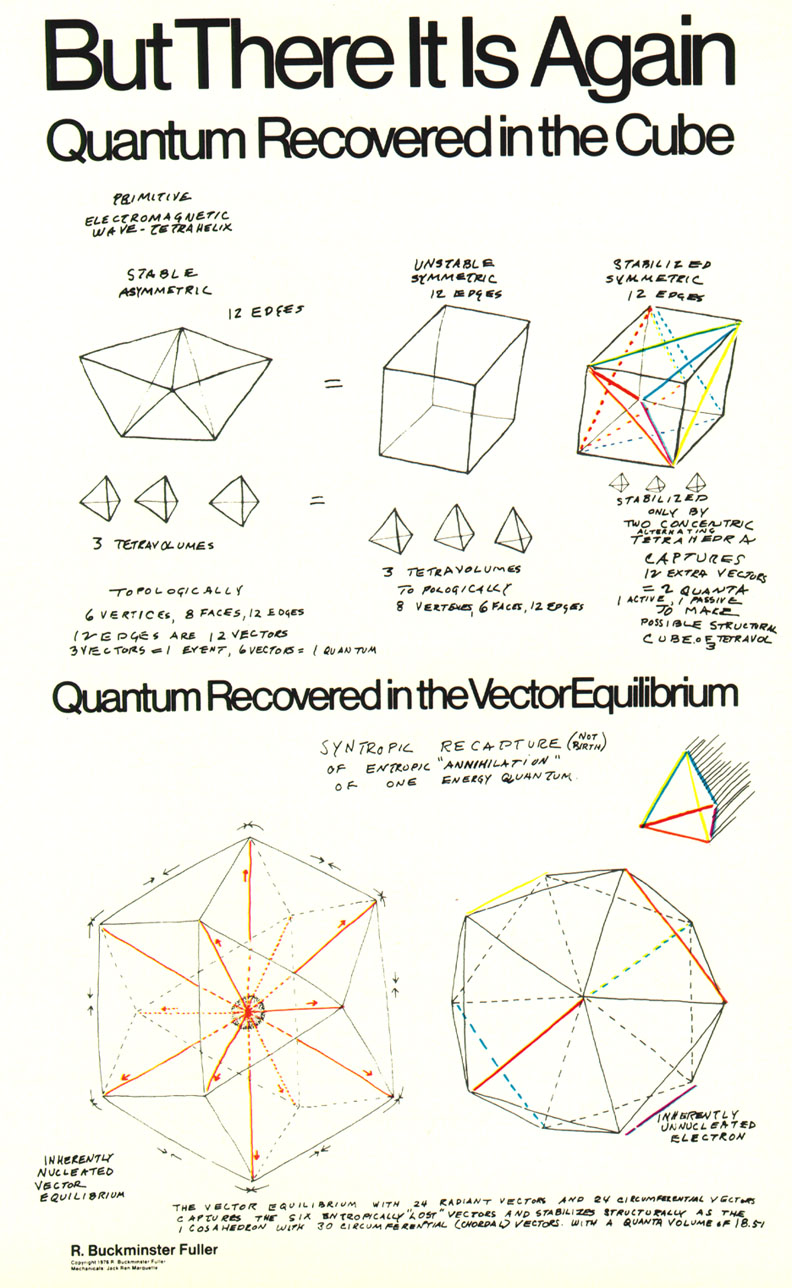
of linking the notions of 'society,' 'social factor,' and 'social explanation' with a sudden
acceleration in the description … When you wish to discover the new unexpected actors
that have more recently popped up and which are not yet bona fide members of 'society,'
you have to travel somewhere else and with very different kinds of gear … There's no
question ANT prefers to travel slowly, on small roads, on foot, and by paying the full
cost of any displacement out of its own pocket" (22-23)
. "It can be important / To have
waited at least a moment to see what was already there": this could be the actor-network
theorist's, as well as the poet's, motto.